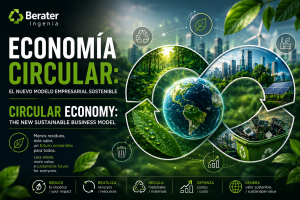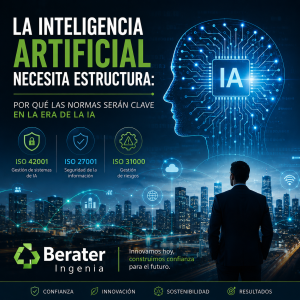


Caring for the planet is not just a trend, it's a corporate responsibility. More and more organizations understand that sustainable management not only benefits the environment, but also drives growth and strengthens reputation. In this context, ISO 14001, the international standard for ENVIRONMENTAL MANAGEMENT SYSTEMS, becomes a key tool.
What is ISO 14001?
ISO 14001 establishes a framework that helps companies identify, manage, and reduce their environmental impact. It focuses on aspects such as the efficient use of resources, waste management, and pollution prevention, aligning operations with global sustainability goals.
Any organization, regardless of size or sector, can implement this standard to demonstrate its commitment to environmental protection and compliance with environmental legislation.
Why is ISO 14001 certification important?
Obtaining this certification demonstrates that the company takes its environmental performance seriously and seeks to continuously improve it. Its main benefits include:
- Reduce costs through energy savings and better resource management.
- Strengthen brand reputation and customer trust.
- Comply with legal requirements and avoid environmental penalties.
- Promote a culture of responsibility and sustainability within the organization.
Beyond the practical benefits, the certification positions the company as part of the global movement in favor of the environment, a value increasingly appreciated by customers, investors and society.
A sustainable vision for the future
Implementing ISO 14001 means adopting a proactive approach to sustainability. It's not just about complying with standards, but about building a system that promotes continuous improvement and integrates environmental awareness into every decision.
Ultimately, ISO 14001 certification helps organizations grow responsibly—protecting the planet while strengthening their business performance. Because caring for the environment is also caring for the future of the company.